
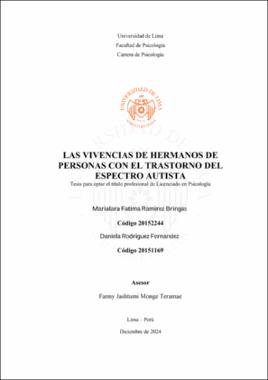
Las vivencias de hermanos de personas con el trastorno del espectro autista
Ver/
Descargar
(application/pdf: 1.283Mb)
(application/pdf: 1.283Mb)
Autorización
(application/pdf: 210.1Kb)
(application/pdf: 210.1Kb)
Reporte de similitud
(application/pdf: 1.330Mb)
(application/pdf: 1.330Mb)
Fecha
2024Metadatos
Mostrar el registro completo del ítemResumen
Esta investigación se desarrolla desde un enfoque cualitativo, con carácter descriptivo
bajo un diseño fenomenológico con el objetivo de describir y analizar las vivencias y
repercusiones durante la niñez de personas con hermanos diagnosticados con Trastorno
del Espectro Autista. Para la recolección de datos se validó por juicio de expertos una
guía de entrevista semiestructurada que se aplicó a diez participantes entre 18 y 49 años,
de ambos sexos. Se transcribieron y analizaron las entrevistas categorizando la
información en emociones, pensamientos, comportamientos y repercusiones. Los
resultados revelaron que las emociones frente a las primeras manifestaciones clínicas y
el diagnóstico fueron de valencia negativa (miedo y preocupación), pero en las
intervenciones la valencia fue positiva (alegría y tranquilidad). Manifestaron
cuestionamientos, dudas sobre el futuro del hermano y pensamientos sobre los beneficios
de la intervenciones. Inicialmente, algunos presentaron una tendencia a cuidarlos,
mientras otros, los evitaban. Después del diagnóstico adoptaron los roles de cuidador,
protector e investigador e involucrándose en las intervenciones. Si bien han percibido
consecuencias negativas, consideran que la convivencia con el hermano con TEA es una
experiencia marcada por momentos positivos de aprendizaje que incluso ha determinado
lo que son actualmente como personas. This research is developed from a qualitive approach, with a descriptive character under
a phenomenological design with the objetive of describing and analyzing the experiences
and repercussions during the childhood of people with siblings diagnosed with Autism
Spectrum Disorder. For data collection, a semi-structured interview guide was validated
by expert judgment and applied to ten participants between 18 and 49 years old, of both
sexes. The interviews were transtribed and analyzed, categorizing the information into
emotions, thoughts, behaviors and repercussions. The results revealed that the emotions
regarding the first clinical manifestations and the diagnosis were of negative balance (fear
and worry), but regarding the interventions the balance was postive (joy and calmn).
They expressed questions, doubts abou their sibling´s future and various thoughts about
the benefits of the intervention. Initially, some showed a tendency to take care of them,
while others avoided them. After the diagnosis, they adopted the roles of caregiver,
protector and researcher, getting involved in the interventions. Although they have
perceived negative consequences, consider that living wint the sibling with ASD is an
experience marked by positive learning moments that have even determined who they
currently are as persons.
Editor
Universidad de LimaTemas
Coleccion(es)
- Tesis [170]

Excepto si se señala otra cosa, la licencia del ítem se describe como info:eu-repo/semantics/openAccess